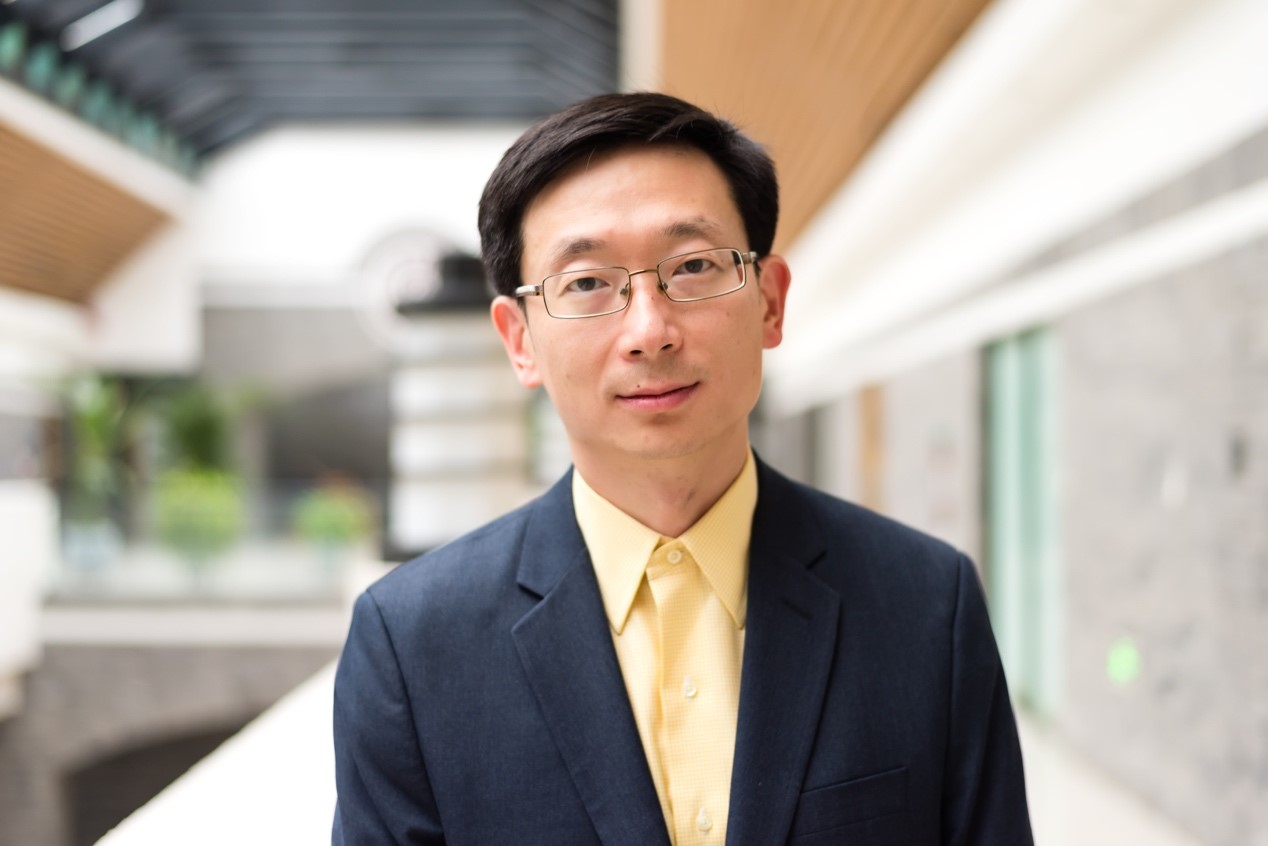
Sheng Ding
E-mail: shengding@tsinghua.edu.cn
Phone: +86-10-62795022
Research Area:
My lab has been developing and applying innovative chemical approaches to stem cell biology and regeneration, with a focus on discovering and characterizing novel small molecules that can control cell fate and function of various cell types, including stem cell maintenance, activation, differentiation and reprogramming in various developmental stages and tissues. Specific projects include (1) Self-renewal regulation of embryonic and adult stem cells; (2) Directed and step-wised differentiation of embryonic stem cells toward neuronal, cardiac and pancreatic lineages; (3) Subtype specification of human tissue-specific stem/progenitor cells; (4) Cellular plasticity and reprogramming of lineage-restricted somatic cells to alternative cell fate (e.g., toward iPSCs or transdifferentiation); (5) Functional proliferation of adult cardiomyocytes and pancreatic beta cells; (6) Developmental signaling pathways (i.e. Wnt, Hh, BMP and FGF) and epigenetic mechanisms (histone and DNA de/methylation); (7) Development of new technologies for drug discovery. Moreover, major efforts are devoted to characterize the molecular mechanism of these identified small molecules using various approaches, including detailed structure-activity-relationship (SAR) studies, affinity chromatography for target identification, transcriptome profiling, proteomics analysis, chemical/genetic epistasis, and biochemical and functional assays in vitro and in vivo. So far, functional small molecules and fundamental mechanisms have been identified and are being characterized in each of the above twenty plus distinct biological processes involving regulation of stem/progenitor cells. Those studies may ultimately facilitate the therapeutic application of stem cells and the development of small molecule drugs to stimulate tissue and organ regeneration in vivo, or treating cancers.
Selected Publications:
1.Hu X, Wu J, Shi L, Wang F, He K, Tan P, Hu Y, Yang Y, Wang D, Ma T, Ding S. (2025). The transcription factor MEF2C restrains microglial overactivation by inhibiting kinase CDK2. Immunity. 58(4): 946-960
2.He K, Xue Q, Zhou W, Wang P, Hu X, Lin T, Chen N, Wang B, Ma T, Ding S. (2024). Extended pegRNAs enhance the editing capability of Prime editing. Trends Biotechnol. 43(1): 206-219
3.Zhou W, He K, Wang C, Wang P, Wang D, Wang B, Geng H, Lian H, Ma T, Nie Y, Ding S. (2023). Pharmacologically inducing regenerative cardiac cells by small molecule drugs. eLife. 13:RP93405.
4.Hu Y, Yang Y, Tan P, Zhang Y, Han M, Yu J, Zhang X, Jia Z, Wang D, Li Y, Ma T, Liu K, Ding S. (2022). Induction of mouse totipotent stem cells by a defined chemical cocktail. Nature. 617(7962): 792-797
5.Li Y, Wang C, Gao H, Gu J, Zhang Y, Zhang Y, Xie M, Cheng X, Yang M, Zhang W, Li Y, He M, Xu H, Zhang H, Ji Q, Ma T, Ding S, Zhao Y, Gao Y. (2022). KDM4 inhibitor SD49-7 attenuates leukemia stem cell via KDM4A/MDM2/p21CIP1 axis. Theranostics 12(11):4922-4934
6.Desai RV, Chen X, Martin B, Chaturvedi S, Hwang DW, Li W, Yu C, Ding S, Thomson M, Singer RH, Coleman RA, Hansen MMK, Weinberger LS. (2021). A DNA repair pathway can regulate transcriptional noise to promote cell fate transitions. Science. 373(6557): eabc6506
7.Zhou W, Ma T, Ding S. (2021). Non-viral approaches for somatic cell reprogramming into cardiomyocytes. Semin Cell Dev Biol. 122: 28-36
8.Theodoris CV, Zhou P, Liu L, Zhang Y, Nishino T, Huang Y, Kostina A, Ranade SS, Gifford CA, Uspenskiy V, Malashicheva A, Ding S, Srivastava D. (2021). Network-based screen in iPSC-derived cells reveals therapeutic candidate for heart valve disease. Science. 371(6530): eabd0724
9.Lu G, Zhang X, Zheng W, Sun J, Hua L, Xu L, Chu XJ, Ding S, Xiong W. (2020). Development of a simple in vitro assay to identify and evaluate nucleotide analogs against SARS-CoV-2 RNA-dependent RNA polymerase. Antimicrob Agents Chemother. 65(1): e01508-20
10.Yu C, Ding S. (2020). Therapeutic strategies targeting somatic stem cells: Chemical approaches. Bioorg Med Chem. 28(24):115824
11.Telpoukhovskaia MA, Liu K, Sayed FA, Etchegaray JI, Xie M, Zhan L, Li Y, Zhou Y, Le D, Bahr BA, Bogyo M, Ding S, Gan L. (2020). Discovery of small molecules that normalize the transcriptome and enhance cysteine cathepsin activity in progranulin-deficient microglia. Sci Rep. 10(1):13688
12.Wilson JL, Cheung KWK, Lin L, Green EAE, Porrás AI, Zou L, Mukanga D, Akpa PA, Darko DM, Yuan R, Ding S, Johnson WCN, Lee HA, Cooke E, Peck CC, Kern SE, Hartman D, Hayashi Y, Marks PW, Altman RB, Lumpkin MM, Giacomini KM, Blaschke TF. (2020). Scientific considerations for global drug development. Sci Transl Med. 12(554): eaax2550
13.Perry JM, Tao F, Roy A, Lin T, He XC, Chen S, Lu X, Nemechek J, Ruan L, Yu X, Dukes D, Moran A, Pace J, Schroeder K, Zhao M, Venkatraman A, Qian P, Li Z, Hembree M, Paulson A, He Z, Xu D, Tran TH, Deshmukh P, Nguyen CT, Kasi RM, Ryan R, Broward M, Ding S, Guest E, August K, Gamis AS, Godwin A, Sittampalam GS, Weir SJ, Li L. (2020). Overcoming Wnt-β-catenin dependent anticancer therapy resistance in leukaemia stem cells. Nat Cell Biol. 22(6): 689-700
14.An Z, Liu P, Zheng J, Si C, Li T, Chen Y, Ma T, Zhang MQ, Zhou Q, Ding S. (2019). Sox2 and Klf4 as the Functional Core in Pluripotency Induction without Exogenous Oct4. Cell Rep. 29(7): 1986-2000
15.Liu C, Hu X, Li Y, Lu W, Li W, Cao N, Zhu S, Cheng J, Ding S, Zhang M. (2019). Conversion of mouse fibroblasts into oligodendrocyte progenitor-like cells through a chemical approach. J Mol Cell Biol. 11(6): 489-495
16.Li F, Xu Y, Liu B, Singh PK, Zhao W, Jin J, Han G, Scott AW, Dong X, Huo L, Ma L, Pizzi MP, Wang Y, Li Y, Harada K, Xie M, Skinner HD, Ding S, Wang L, Krishnan S, Johnson RL, Song S, Ajani JA. (2019). YAP1-Mediated CDK6 Activation Confers Radiation Resistance in Esophageal Cancer - Rationale for the Combination of YAP1 and CDK4/6 Inhibitors in Esophageal Cancer. Clin Cancer Res. 25(7): 2264-2277