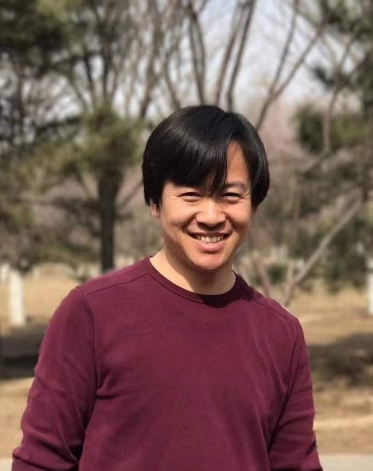
Peng Jiang, Ph.D
Dr Jiang received his Ph.D. from the University of Science and Technology of China in 2008 and completed postdoctoral training at the Perelman School of Medicine at the University of Pennsylvania, USA. In October 2014, he returned to China and joined Tsinghua University as an Assistant Professor to establish an independent laboratory. Currently, he is an associate professor (Tenured) at Tsinghua University, School of Life Sciences. He is also a Principal Investigator at the Tsinghua-Peking Centre for Life Sciences. He is currently an advisory board member of Cell Metabolism, Trends in Endocrinology and Metabolism and Medcomm.
Research interest keywords:
Tumour metabolism, Metabolite sensing and signaling, Immunometabolism, Cell fate determinants.
Research Interests:
The Jiang laboratory is interested in tumour and immune cell metabolism, with a particular focus on metabolite signaling.
The metabolism inside and outside tumour cells is markedly different from that of normal cells in differentiated tissues. Metabolic reprogramming typically confers a pro-proliferative and/or survival advantage to tumour cells. Emerging evidence suggests that metabolic alterations are ultimately linked to genetic changes that contribute to cell fate decisions. Tumour development is thought to be driven by intrinsic factors, but the extrinsic microenvironment also has an impact.
Currently, the lab focuses on two related areas: 1) Tumour metabolism. How cancer cells reprogram their metabolism, with special reference to the role of p53, and the urea cycle metabolism in tumour development. Through systematic studies, we wish to gain a clear understanding of the relationship between metabolism and the nature of tumours; 2) Metabolite signaling in the microenvironment. We are particularly interested in how immune cells sense changes in nutrients or microenvironmental metabolites and how metabolites signal metabolic remodeling to anti-tumour immune responses. Understanding these issues will not only be of great value in identifying and targeting therapeutic windows for cancer, but may also provide insights into the evolutionary mechanisms of tumours.
Major findings:
The major findings of the Jiang lab in recent years include the following: 1) Malignant tumours (e.g. those carrying p53 deletions or mutations) exhibit abnormal metabolism of NADPH, polyamines and the urea cycle. 2) Tumour cell development depends heavily on polyamine synthesis and fumarate metabolism. 3) Specific metabolites/amino acids in the intracellular or microenvironmental context, such as citrulline, fumarate, asparagine and 2-HG, can be sensed by tumour or immune cells. These metabolic signals significantly alter immune responses and anti-tumour capacity.
Selected Publications:
Research Articles
Selective Research Articles (*corresponding author):
1.Xia W#, Mao Y#, Xia Z#, Cheng J, Jiang P*. (2025). Metabolic remodelling produces fumarate via the aspartate-argininosuccinate shunt in macrophages as an antiviral defence. Nature Microbiology. 10(5):1115-1129.
2.Cheng J#, Xiao Y#, Peng T#, Zhang Z#, Qin Y#, Wang Y, Shi J, Yan J, Zhao Z, Zheng L, He Z, Wang J, Zhang Z*, Li C*, Zhu H*, Jiang P*. (2025). ETV7 limits the antiviral and antitumor efficacy of CD8+ T cells by diverting their fate toward exhaustion. Nature Cancer. 6(2):338-356.
3.Wu J#, Zhou J#, Li G#, Sun X, Xiang C, Chen H, Jiang P*. (2024). Metabolic determinants of germinal center B cell formation and responses. Nat Chemical Biology. 21(3):371-382.
4.Xia W, Jiang P*. (2024). p53 promotes antiviral innate immunity by driving hexosamine metabolism. Cell Reports. 43(2):113724.
5.Xu X, Wang J, Xu L, Li P*, Jiang P*. (2024). p53 suppresses lipid droplet-fueled tumorigenesis through phosphatidylcholine. J Clin Invest. 134(4):e171788.
6.Chen T#, Xie S#, Cheng J, Zhao Q, Wu H*, Jiang P*, Du W*. (2024). AKT1 phosphorylation of cytoplasmic ME2 induces a metabolic switch to glycolysis for tumorigenesis. Nat Communs. 15(1):686.
7.Cheng J#, Yan J#, Liu Y#, Shi J#, Wang H, Zhou H, Zhou Y, Zhang T, Zhao L, Meng X, Gong H, Zhang X*, Zhu H*, Jiang P*. (2023). Cancer-cell-derived fumarate suppresses the anti-tumor capacity of CD8+ T cells in the tumor microenvironment. Cell Metabolism. 35(6):961-978.
8.Cheng, J#, Liu, Y#, Yan, J#, Zhao L, Zhou Y, Shen X, Y, Chen Y, Meng X, Zhang X* & Jiang P*. (2022). Fumarate suppresses B-cell activation and function through direct inactivation of LYN. Nature Chemical Biology. 18(9):954-962.
9.Zhao M#, Yao P#, Mao Y#, Wu J#, Wang W, Geng C, Cheng J, Du W * and Jiang P*. (2022). Malic enzyme 2 maintains protein stability of mutant p53 through 2-hydroxyglutarate. Nature Metabolism. 4(2):225-238.
10.Mao Y, Shi D, Li G, Jiang P*. (2022). Citrulline depletion by ASS1 is required for proinflammatory macrophage activation and immune responses. Molecular Cell. 82(3):527-541.
11.Li G#, Wu J#, Li L, Jiang P*. (2021).p53 deficiency induces MTHFD2 transcription to promote cell proliferation and restrain DNA damage. Proc Natl Acad Sci U S A. 118(28):e2019822118.
12.Wu J#, Li G#, Li L, Li D, Dong Z, Jiang P*. (2021). Asparagine enhances LCK signalling to potentiate CD8+ T cell-activation and anti-tumour responses. Nature Cell Biology, 23(1):75-86.
13.Deng L, Yao P, Li L, Ji F, Zhao S, Xu C, Lan X, Jiang P*. (2020). p53-mediated control of aspartate-asparagine homeostasis dictates LKB1 activity and modulates cell survival. Nature Communications, 11(1):1755.
14.Li L, Mao Y, Zhao L, Li L, Wu J, Zhao M, Du W, Yu L, Jiang P*. p53 regulation of ammonia metabolism through urea cycle controls polyamine biosynthesis. Nature. (2019) 567(7747):253-256.
15.Li L#, Li L#, Li W, Chen T, Bin Zou, Zhao L, Wang H, Wang X, Xu L, Liu X, Wang D, Li B, Mak TW, Du W*, Yang X*, Jiang P*. TAp73-induced phosphofructokinase-1 transcription promotes the Warburg effect and enhances cell proliferation. Nature Communs. (2018), Nov 8; 9(1):4683.
16.Du W#, Jiang P#, Mancuso A, Stonestrom A, Brewer M, Minn AJ, Mak TW, Wu M* and Yang X*. TAp73 enhances the pentose phosphate pathway and supports cell proliferation. Nature Cell Biology. (2013), Aug. 15, 991–1000.
17.Jiang P#, Du W#, Mancuso A, Wellen KE, Yang X*. Reciprocal regulation of p53 and malic enzymes modulates metabolism and senescence. Nature. (2013), Jan. 493: 689-693.
18.Jiang P#, Du W#, Wang X, Mancuso A, Gao X, Wu M* and Yang X*. p53 regulates biosynthesis through direct inactivation of glucose-6-phosphate dehydrogenase. Nature Cell Biology. (2011) Mar.13: 310-316.
Invited reviews/commentaries:
19.Zhou J#, Sun X#, Jiang P*. (2025). The emerging roles of the urea cycle in tumor microenvironment and therapies. Trends in Cancer. 12:S2405-8033(25)00205-5.
20.Cheng J#, *, Xiao Y#, Jiang P*. (2025). Fumarate integrates metabolism and immunity in diseases. Trends in Endocrinol Metabolism. 16: S1043-2760(25)00051-7.
21.Jiang P*. A glycolytic metabolite that drives BRCA2 haploinsufficiency. Cell. (2024) Apr 25;187(9):2124-2126. Invited preview.
22.Mao Y#, Xia Z#, Xia W#, Jiang P*. (2024). Metabolic reprogramming, sensing, and cancer therapy. Cell Reports. 43(12):115064.
23.Wu J#, Sun X#, Jiang P*. (2024). Metabolism-inflammasome crosstalk shapes innate and adaptive immunity. Cell Chemical Biology. 31(5):884-903.
Contact:
Email: pengjiang@mail.tsinghua.edu.cn
Phone:010-62786079
Mail: Rm B1013, Biomedical Building, Tsinghua University, Haidian District, Beijing, China, 100084
http://life.tsinghua.edu.cn/lifeen/info/1032/1070.htm or http://www.cls.edu.cn/english/PrincipalInvestigator/pi/index4821.shtml