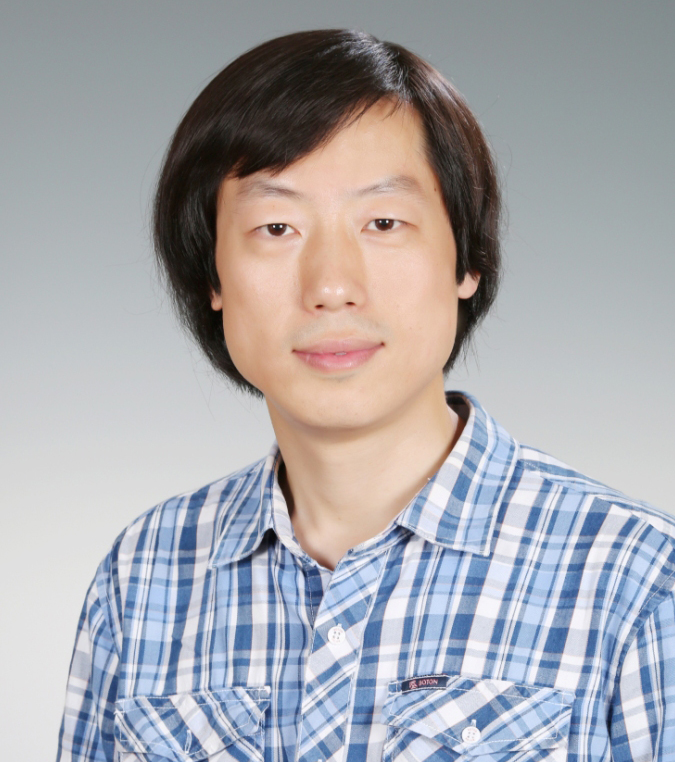
Fuchou Tang
Email: tangfuchou (at)pku(dot)edu(dot)cn;
Research Area:Human embryonic development; Germline development; Single cell omics
Research Interests:
Germline cells are the cells critical for transmitting genomic information from generation to generation to keep a multicellular organism species immortal. Germline cells include totipotent zygotes & cleavage stage embryos, pluripotent inner cell mass (ICM) & peri-implantation epiblasts (EPI), primordial germ cells (PGCs), fetal germ cells (FGCs), female germ cells during oogenesis, male germ cells during spermatogenesis, mature oocytes and mature sperm. During germline development, all of the epigenetic changes need to be reset back (reprogramming) at the next generation. So the epigenetic regulations in germline cells are most complex and most accurate in multicellular organisms. Dissecting the molecular mechanisms of germline development is important for understanding human development, and for its application of precision medicine in order to cure related human diseases. Our lab focuses on the epigenetic mechanisms of human germline development as well as tumorigenesis. Through this, we want to understand the epigenetic regulation of human germline development and the global epigenetic programming & reprogramming during this process. We use single-cell sequencing technologies (single-cell genome, transcriptome, DNA methylome, chromatin accessibility, histone modifications, transcription factor binding, 3D genome, as well as multi-omics sequencing technologies), genome editing, embryo micromanipulation, derivation and culture of organoids, directed differentiation of human embryonic stem cells to analyze the epigenetic basis of the gene regulation network during human germline development at single-cell and single-base resolution. These works may lead to better diagnosis and treatment of related infertility, sterility, and tumors.
Selected Publications:
1. Li M, Jiang Z, Xu X,Wu X, Liu Y, Chen K, Liao Y, Li W, Wang X, Guo Y, Zhang B, Wen L*, Kee K*, Tang Fuchou* (2025) Chromatin accessibility landscape of mouse early embryos revealed by single-cell NanoATAC-seq2. Science. 387: eadp4319
2. Li Q, Guo Y, Wu Z, Xu X, Jiang Z, Qi S, Liu Z, Wen L, Tang Fuchou* (2024) scNanoSeq-CUT&Tag: a single-cell long-read CUT&Tag sequencing method for efficient chromatin modification profiling within individual cells. Nature Methods. 21: 2044-2057
3. Li W, Lu J, Lu P, Gao Y, Bai Y, Chen K, Su X, Li M, Liu J, Chen Y, Wen L, Tang Fuchou* (2023) scNanoHi-C: a single-cell long-read concatemer sequencing method to reveal high-order chromatin structures within individual cells. Nature Methods. 20: 1493-1505
4. Hu Y, Jiang Z, Chen K, Zhou Z, Zhou X, Wang Y, Yang J, Zhang B, Wen L, Tang Fuchou* (2023) scNanoATAC-seq: a long-read single-cell ATAC sequencing method to detect chromatin accessibility and genetic variants simultaneously within an individual cell. Cell Research. 33: 83-86
5. Zhou Y, Bian S, ..., Fu W*, Tang Fuchou* (2020) Single-Cell Multiomics Sequencing Reveals Prevalent Genomic Alterations in Tumor Stromal Cells of Human Colorectal Cancer. Cancer Cell. 38: 818-828
6. Zhou F, Wang R, Yuan P, Ren Y, ..., Lian Y, Li J, Wen L, Yan L, Qiao J*, Tang Fuchou* (2019) Reconstituting the transcriptome and DNA methylome landscapes of human implantation. Nature. 572: 660-664
7. Zhu P, Guo H, Ren Y, ..., Wen L, Yan L*, Qiao J*, Tang Fuchou* (2018) Single-cell DNA methylome sequencing of human preimplantation embryos. Nature Genetics. 50: 12-19
8. Bian S, Hou Y, Zhou X, Li X, Yong J, ..., Zhu P, Xiu D, Yan L, Wen L, Qiao J*, Tang Fuchou*, Fu W* (2018) Single-cell multiomics sequencing and analyses of human colorectal cancer. Science. 362: 1060-1063
9. Guo F, Yan L, Guo H, Li L, Hu B, Zhao Y, Yong J, Hu Y, Wang X, Wei Y, Wang W, Li R, ......, Wen L, Gao Y, Tang Fuchou*, Qiao J* (2015) The Transcriptome and DNA Methylome Landscapes of Human Primordial Germ Cells. Cell. 161, 1437-1452
10.Guo H, Zhu P, Yan L, Li R, Hu B, Lian Y, Yan J, Ren X, Lin S, Li J, Jin X, Shi X, Liu P, Wang X, Wang W, Wei Y, Li X, Guo F, Wu X, Fan X, Yong J, Wen L, Xie SX, Tang Fuchou*, Qiao J* (2014) Nature. 511: 606-610