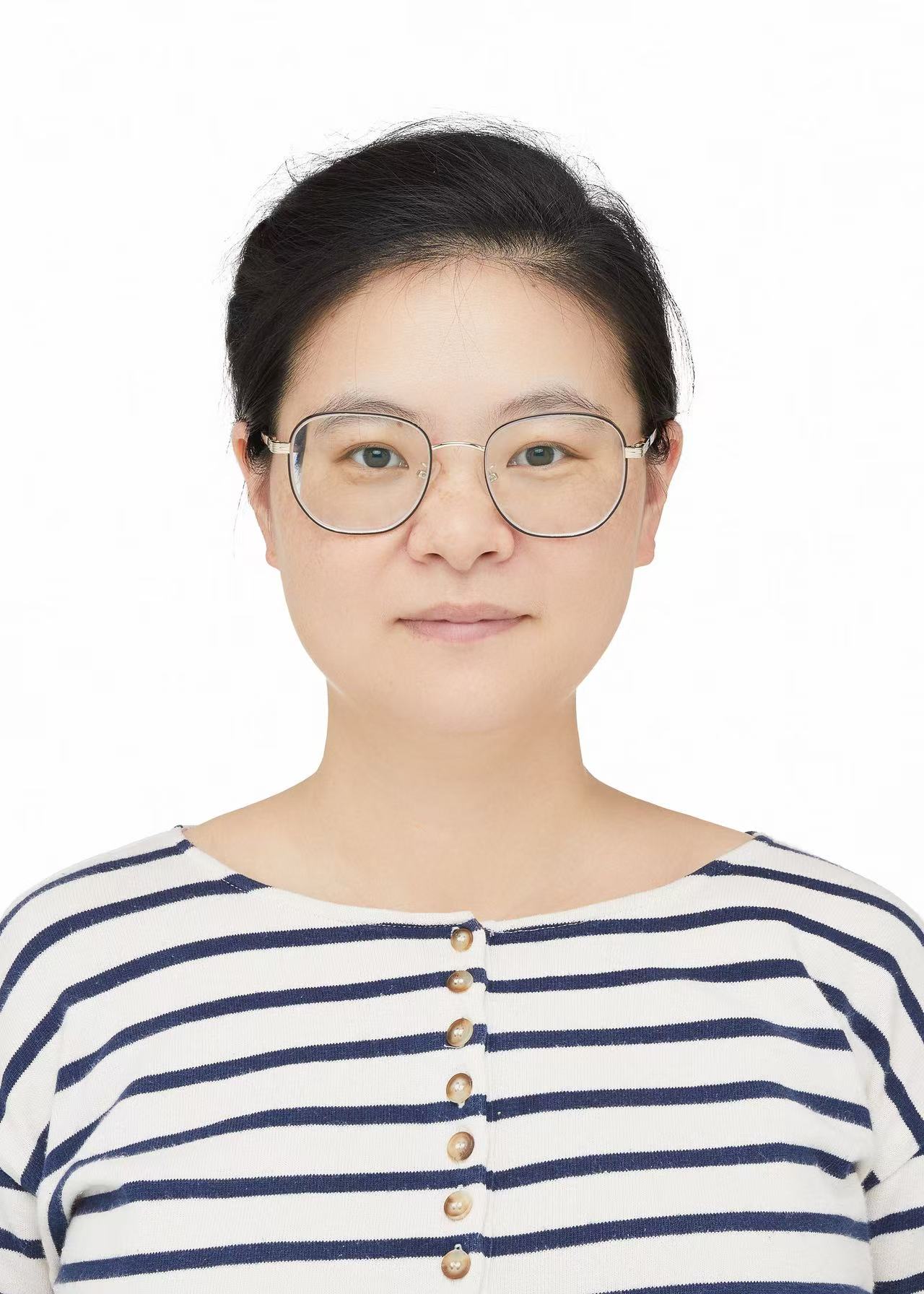
Qianqian Wang
Mail : cassieqq@mail.tsinghua.edu.cn
Discipline direction: Biochemistry, molecular biology, structural biology, and nanobody development.
Research area:
Autism spectrum disorder (ASD) affects about 78 million people worldwide, making it one of the most prevalent and pressing neurological conditions of our time. Over the past decade, advances in autism genetics have delineated the genetic architecture of ASD, pinpointing hundreds of genes as ASD susceptibility genes. Yet advances in genetic discovery have not been transformed into an actionable understanding of ASD pathology. From linking genes to biology, critical gaps in knowledge remain. One major hindrance in this regard is that we fundamentally do not understand the molecular mechanisms that govern the actions of proteins encoded by ASD-linked genes. The Wang lab seeks to bridge this gap by elucidating the function, regulation, and interaction networks of ASD-associated proteins and their alterations in autism at molecular resolution. Drawing from molecular insights into ASD-associated proteins, we also aim to develop nanobodies capable of precisely modulating protein dynamics and functionality for potential therapeutics.
Recent studies have highlighted the profound yet poorly understood connection between cholesterol and ASD. Beyond the common co-occurrence of ASD and cholesterol dysregulation in patients, 76 of the top 232 ASD-risk genes are either regulated by cholesterol or involved in its regulation. Cholesterol could be crucial in ASD development, and our ongoing research will define its role. Dr. Wang received the 2024 Simons Foundation Autism Research Initiative (SFARI) Bridge to Independence Award in recognition of her outstanding promise in advancing innovative research on ASD.
Selected publications:
1.Wang, Q.†, Wang, J., Tokhtaeva, E., Li, Z., Martín, M.G., Ling, X.B., Dunn, J.C.Y.† An Engineered living intestinal muscle patch produces macroscopic contractions that can mix and break down artificial intestinal contents. Advanced Materials, Apr;35 (15), e2207255 (2023). †co-corresponding authors
Featured by Advanced Science News (link) and New Scientist (link).
2.Wang, Q.*, Asarnow, D.E.*, Ding K., Mann R., Hatakeyama J., Zhang, Y., Ma, Y., Cheng, Y., Beachy, P.A. Dispatched uses Na+ flux to power lipid-modified Hedgehog release. Nature 599 (7884), 320-324 (2021). *co-first authors
3.Wang, Q., Wang, K., Solorzano-Vargas, R.S., Lin, P.Y., Walthers, C.M., Thomas, A., Martín, M.G., Dunn, J.C.Y. Bioengineered intestinal muscularis complexes with long-term spontaneous and periodic contractions. PLoS One 13, 1–29 (2018).
4.Kobayashi M., Khalil H.A., Lei N.Y., Wang Q., Wang K., Wu B.M., & Dunn J.C.Y. Bioengineering functional smooth muscle with spontaneous rhythmic contraction in vitro. Sci Rep 10, 8(1):13544 (2018).
5.Kobayashi, M., Lei, N. Y., Wang, Q., Wu, B. M. & Dunn, J. C. Y. Orthogonally oriented scaffolds with aligned fibers for engineering intestinal smooth muscle. Biomaterials 61, 75–84 (2015).